Electrical Panel Upgrades in Manassas, VA
Panel Upgrades in Manassas — Where Municipal Electric Means Lower Rates
Manassas runs its own electric utility — not Dominion Energy. That means lower residential rates and a different coordination process for panel upgrades. Mohammed Salahuddin is a Virginia-licensed Master Electrician who knows the difference. Free diagnostic visit, written estimate, City of Manassas permit handled.
How much does it cost to upgrade from 100 amp to 200 amp in Manassas?
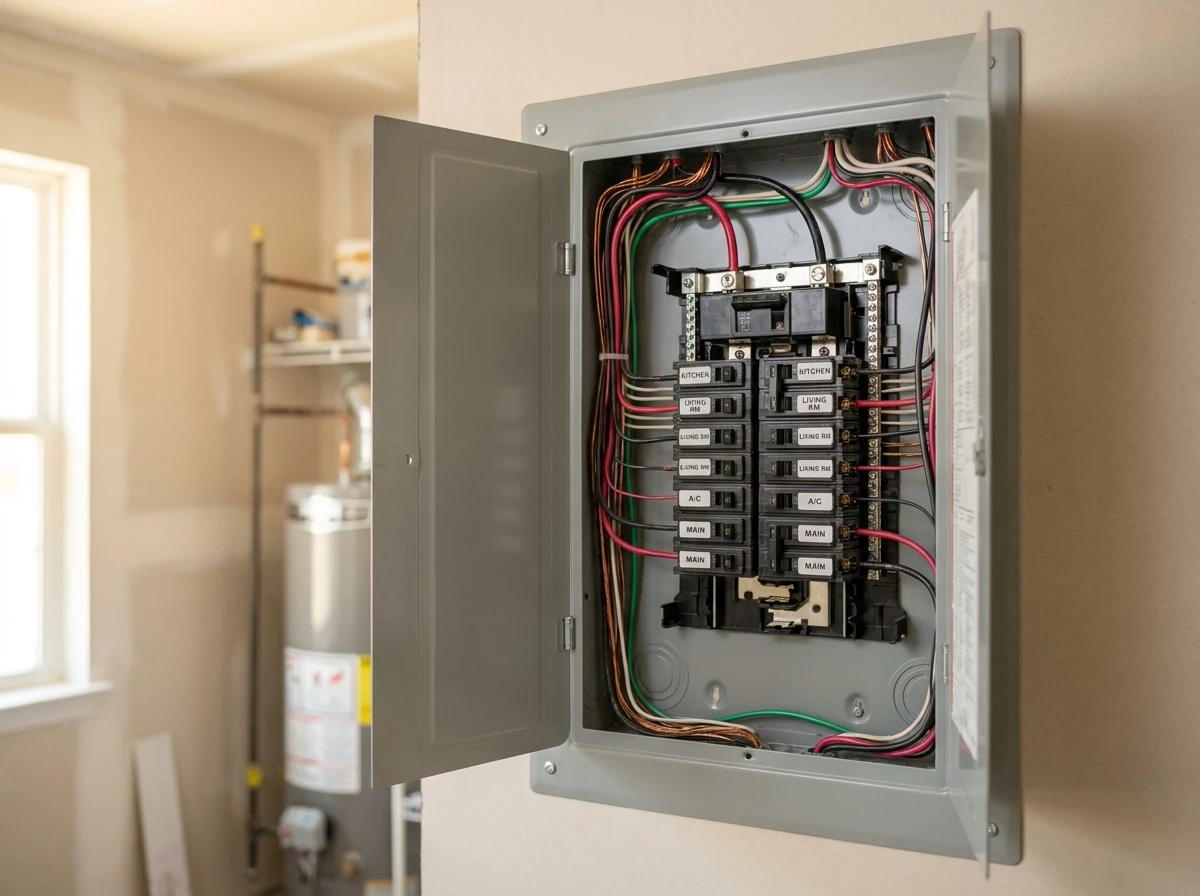
The cost of a panel upgrade varies with every house, so we do not publish a flat rate. But there is one factor that makes Manassas different from every other city in our service area: Manassas runs its own municipal electric utility. The City of Manassas Electric Utility — not Dominion Energy — delivers your power. The residential rate is approximately 12.61 cents per kWh, which is roughly 14% below the Virginia state average. That means when you upgrade your panel to support a larger load — an EV charger, a heat pump, a home addition — the ongoing cost of running that load is lower here than in Dominion territory.
- What drives the cost: current amperage (60A fuse box vs. 100A breaker panel), service-entrance condition, whether overhead or underground, and code-triggered upgrades the panel swap uncovers.
- Municipal utility coordination: panel upgrades requiring a meter pull in Manassas coordinate with the City of Manassas electric utility (703-257-8219), NOT Dominion Energy. Different utility, different process, different contacts.
- Rate advantage: Manassas residential electric rate is approximately 12.61 cents per kWh — roughly 14% below the Virginia average of 14.71 cents per kWh. Adding capacity (200A upgrade for EV charger or heat pump) delivers more value per dollar in Manassas than in Dominion territory.
- Free diagnostic visit: we come to your Manassas home, open the panel, run a load calculation, and write you an itemized estimate. No trip charge.
What is in your Manassas panel — and what we replace it with
The panel brand matters. Two brands have documented failure rates. Two are what we install.
Federal Pacific Stab-Lok
Fire risk — documented failureStab-Lok breakers fail to trip in measurable percentages of overload tests. Common in pre-1980 Manassas homes in Old Town and Sudley-area neighborhoods. The breaker exists to protect your wiring — when it does not trip, overloaded circuits overheat behind the wall. Insurance carriers in Northern Virginia flag these panels at renewal.
Zinsco-Sylvania
Fire risk — overheatingZinsco panels overheat at the bus-bar connection. The breakers fuse to the bus bar, making them impossible to remove or manually trip. Found in 1960s and 1970s Manassas homes. Internal arc damage is invisible from outside the panel cover.
Square D QO and Homeline
What we installThe most commonly installed residential panel brand in Northern Virginia. QO is the premium tier with bolt-on breakers and full-size copper bus bars. Homeline is the builder-grade option. Both are UL-listed and meet current NEC 2020 requirements.
Eaton CH and BR
What we installLong-standing contractor favorite. CH is the premium line, BR is the value tier. Both use bolt-on connections. We recommend based on your home’s needs and the City of Manassas inspector’s preferences.
Permits in Manassas — this is NOT Prince William County
The number one jurisdiction mistake contractors make in Manassas: they file the permit with Prince William County. Manassas separated from PWC in 1975. It is an independent city with its own permit office and its own electric utility.
Correct: City of Manassas
Office: Department of Community Development — Building Division, 9027 Center St., Manassas, VA 20110
Phone: 703-257-8278
Online: Permit Self Service at manassasva.gov
Electric utility: City of Manassas Electric Utility (703-257-8219; after-hours 703-257-8353) — NOT Dominion Energy
Spanish-language permit guides available — reflecting the 43.9% Hispanic population
Wrong: Prince William County
Manassas is NOT in Prince William County. Filing with PWC’s Building Development Division will not produce a valid Manassas permit. The two jurisdictions have different offices, different inspectors, and — critically — different electric utilities.
A contractor who coordinates the meter pull with Dominion Energy instead of the City of Manassas electric utility will hit a dead end. The municipal utility handles its own meters.
We know the difference because we work in both jurisdictions weekly. We pull the correct permit, coordinate with the correct utility, and schedule the correct inspector. You do not visit either office.
The 1980s building boom — why Manassas panels are all reaching end of life at once
About 35% of all housing in Manassas was built in a single decade: the 1980s. These homes now have 40-year-old panels with original breakers approaching end of life simultaneously. This creates a concentrated replacement-need wave that is different from any other city in our service area.
Pre-1970s: Old Town and downtown core
Old Town Manassas, Sudley area, older downtown blocksRoughly 16% of Manassas housing. 60 to 100 amp panels with original fuse boxes in some Historic Overlay District homes. Cloth-insulated wiring. Galvanized plumbing corrosion. These homes need a full panel-and-wiring assessment — the panel upgrade often uncovers branch-circuit wiring that current code requires you to address.
1970s-1990s: the boom era — 65% of all housing
Wellington, Signal Hill, Blooms Crossing, inner subdivisionsThis is the dominant era. The 1980s alone account for roughly 35% of ALL Manassas housing. 100 to 200 amp panels are standard (200 by mid-1980s). Original breakers are now 35 to 45 years old — that is the expected service life. GFCI coverage is spotty in pre-1996 builds. Some 1970s homes have aluminum branch wiring. The 100A-to-200A upgrade is the single most common project in this era.
2000s: Route 28 corridor and newer subdivisions
Ashton Glen, newer edge-of-city developmentsRoughly 17% of housing. 200 amp panels standard with AFCI breakers. Upgrades in this era are capacity-driven — adding an EV charger or a home addition — not safety-driven. MED’s demand-based pricing makes load management relevant: the utility discourages peak demand, so load-balancing during the panel upgrade conversation matters here.
Manassas’s median construction year is 1985. If your home was built around that date and you are still on the original panel and breakers, they are reaching the end of their expected service life.
Five panel calls we get every week from Manassas homeowners
Real scenarios from the service area. Each traces to a specific cause and a specific fix.
Signal Hill colonial — breakers trip when the heat pump cycles
A 1985 home with a 100A panel and an original heat pump replaced with a high-efficiency unit that draws more startup current. The panel cannot handle the inrush. Load calculation confirms the panel is over capacity. Fix: 200A upgrade with dedicated heat pump circuit. MED coordinates the meter pull — not Dominion.
Wellington townhome — insurance flagged the Federal Pacific panel
The insurance carrier identified a Federal Pacific Stab-Lok panel during underwriting and issued a remediation notice. The homeowner has 60 days to replace it or lose coverage. We replace with a Square D QO, pull the City of Manassas permit, and provide documentation for the carrier.
Old Town bungalow — fuse box with cloth-insulated wiring
A pre-1960 home in Old Town Manassas with an original 60A fuse box. The cloth insulation on the branch-circuit wiring is brittle and crumbling. The panel upgrade here is not just a swap — it includes partial rewiring of the branch circuits that the code now requires GFCI and AFCI protection on.
Blooms Crossing — adding an EV charger to a 100A panel
A Level 2 EV charger draws 50 amps continuous. On a 100A panel that already runs HVAC, kitchen, and general house loads, the math does not work without more capacity. Panel upgrade to 200A first, then the EV charger circuit goes in. MED’s lower rate makes the ongoing EV charging cost 14% cheaper than Dominion territory.
Manassas Park — breaker diagnosis from the review corpus
A homeowner called about a breaker that tripped daily. Mohammad diagnosed it as a failing breaker — not an overloaded circuit, not a panel problem. The breaker was 38 years old and the trip mechanism had worn out. We replaced the breaker for a fraction of what a panel upgrade would have cost. Diagnostic first, fix second.
Can you upgrade your panel without rewiring in Manassas?
The answer depends on your wiring era.
Panel swap only — no rewire needed
- 1980s-2000s homes with copper PVC-insulated wiring (Wellington, Signal Hill, Blooms Crossing, Ashton Glen)
- Existing circuits properly sized and grounding meets NEC
- Service-entrance conductors rated for 200A
- This is the majority of Manassas homes — the 1980s boom era
Panel plus partial rewire
- Pre-1970s Old Town and Sudley homes with cloth-insulated wiring — insulation is brittle, cannot safely carry modern loads
- 1970s homes with aluminum branch wiring — connections need remediation
- Any home where the service entrance is undersized for 200A
- Fuse-box-to-breaker conversions — branch circuits usually need GFCI/AFCI added
We determine the scope during the diagnostic visit. The estimate reflects the actual work — panel only, or panel plus wiring.
About Mohammed Salahuddin — Master Electrician
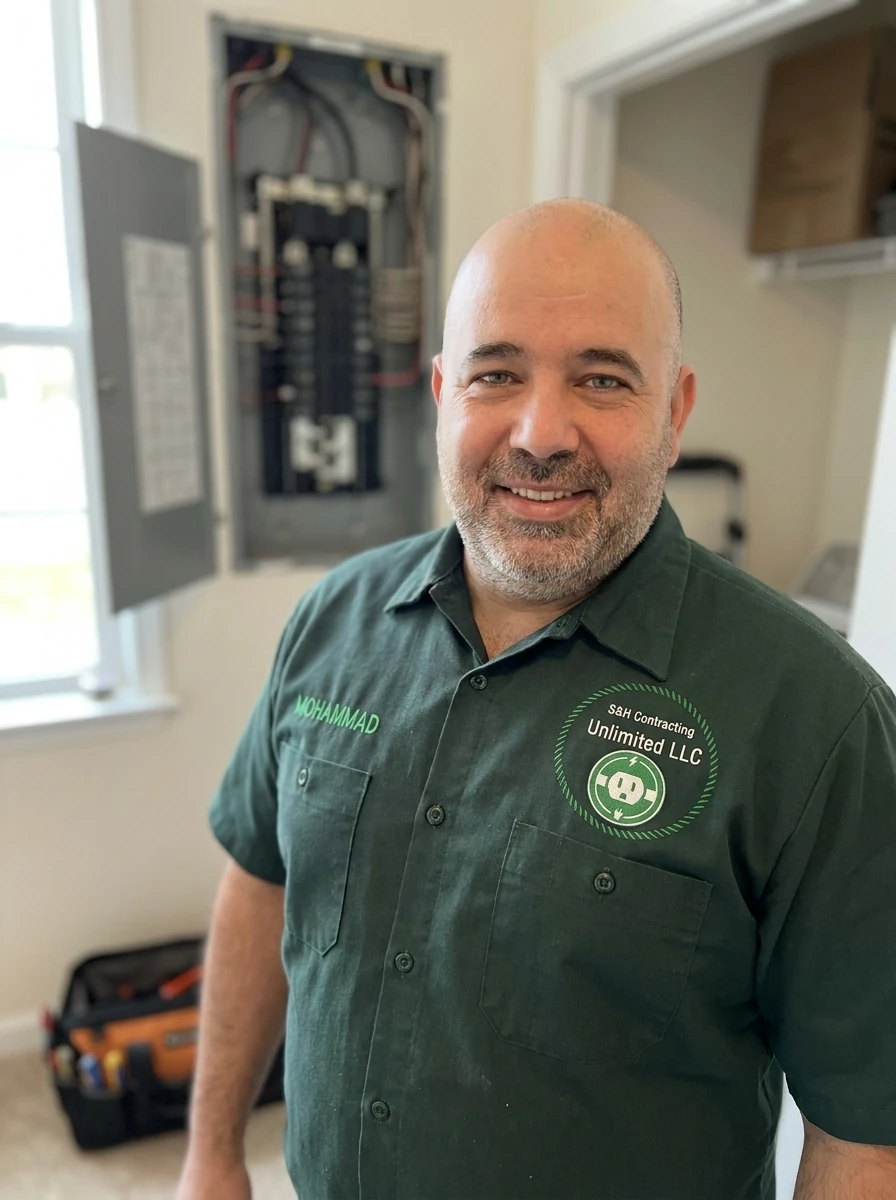
Virginia-licensed Master Electrician — the highest tier the state issues. Sixteen-plus years in the trade, covering residential and commercial work across Manassas and Northern Virginia. Mohammad runs a maintenance team, which means your upgrade gets scheduled in days, not weeks.
On panel calls, he opens the panel personally, reads the service entrance, runs the load calculation, and explains what is happening before quoting. One Manassas Park homeowner called about a breaker that tripped every day — Mohammad diagnosed a worn-out trip mechanism on a 38-year-old breaker, not a panel problem. The fix cost a fraction of what a panel upgrade would have. Diagnostic first, fix second.
S&H Contracting Unlimited is rated 5.0 stars across 77 Google reviews. Read more about our team.
Panel upgrade questions — Manassas, VA
How much does it cost to upgrade from 100 amp to 200 amp in Manassas?
The cost depends on your home’s specific conditions — service-entrance condition, overhead vs. underground, panel brand, and code-triggered upgrades. We do not post a flat rate because the only honest number comes from opening the panel and running a load calculation. What makes Manassas different: the City of Manassas runs its own electric utility at approximately 12.61 cents per kWh — roughly 14% below the Virginia average. The upgrade itself costs the same as in Dominion territory, but the ongoing load you add (EV charger, heat pump) runs cheaper. Call 703-972-5571 for a free diagnostic visit.
Who do I call for a meter pull in Manassas?
The City of Manassas Electric Utility — 703-257-8219 (business hours) or 703-257-8353 (after hours). NOT Dominion Energy. Manassas runs its own municipal utility with 205 miles of primary lines and 15,150 meters. A contractor who calls Dominion for a Manassas meter pull will hit a dead end. We handle the utility coordination as part of every panel upgrade.
Is it worth it to upgrade an electrical panel?
In Manassas, especially so. The municipal electric rate (approximately 12.61 cents/kWh vs. 14.71 cents statewide average) means that adding capacity — for an EV charger, a heat pump, or a home addition — delivers more value per dollar here than in Dominion territory. Beyond the rate advantage: a permitted 200A panel removes insurance friction (carriers flag FPE/Zinsco panels), passes home inspection without negotiation, and supports the loads modern households actually draw.
Do I need a permit for a panel upgrade in Manassas?
Yes. The permit files through the City of Manassas Department of Community Development — Building Division, NOT Prince William County. Manassas is an independent city. We pull the correct permit, coordinate with the correct utility (MED, not Dominion), and schedule the correct inspector. You do not visit the permit office.
Can I upgrade my panel without rewiring my house?
In most Manassas homes from the 1980s boom era (Wellington, Signal Hill, Blooms Crossing) with copper PVC-insulated wiring, yes — the panel swap is a standalone job. In pre-1970s Old Town homes with cloth-insulated or aluminum wiring, the panel upgrade may require partial rewiring. We determine the scope during the diagnostic visit.
Is my Federal Pacific or Zinsco panel dangerous?
Both brands have documented failure rates. Federal Pacific Stab-Lok breakers fail to trip during overload in measurable percentages of tested units. Zinsco panels overheat at the bus-bar connection. If your Manassas home has either brand, replacement is the safety decision. We identify the brand on-site in five minutes.
Why does it matter that Manassas has its own electric utility?
Three reasons. First, the residential rate is lower — approximately 14% below the Virginia average. Second, panel upgrades coordinate through MED (City of Manassas electric utility), not Dominion — a contractor who does not know this wastes time calling the wrong utility. Third, MED uses demand-based pricing that discourages peak demand, making load management during the panel upgrade conversation relevant for EV charger and heat pump additions.
Related electrical services
Ready to upgrade your Manassas panel?
Free diagnostic visit. Written estimate. City of Manassas permit and MED utility coordination handled from start to finish.
703-972-5571