
Light Fixture & Chandelier Installation in Dale City, VA
Fixtures and Chandeliers Installed Right the First Time
Mohammed Salahuddin is a Virginia-licensed Master Electrician who handles everything from flush-mount swaps to heavy chandelier installations in Dale City homes. Pendants, recessed layouts, outdoor sconces — wired to code and tested before we leave. Call for a same-day or next-day estimate.
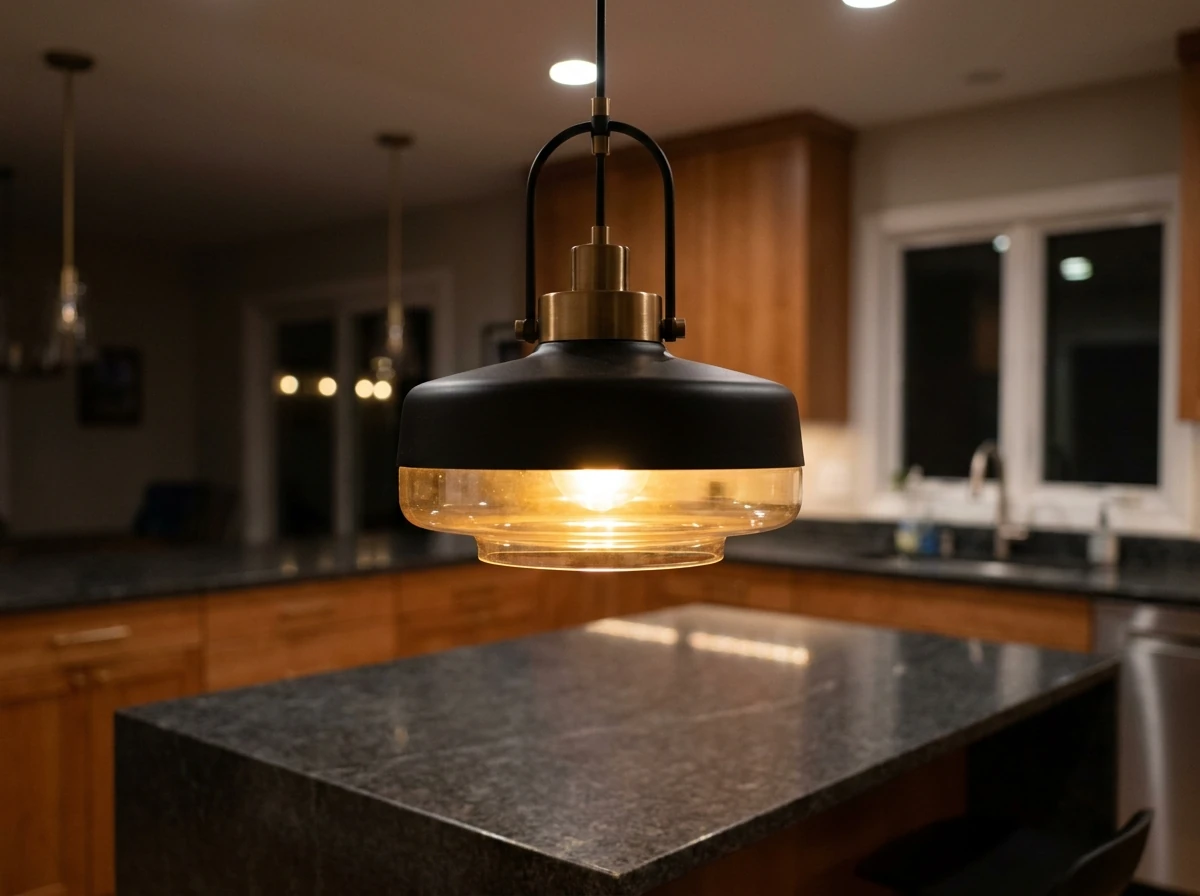
What light fixture installation involves
Light fixture installation covers replacing an outdated flush-mount with something you actually chose, hanging a new pendant over a kitchen island, mounting a chandelier in a two-story foyer, cutting in recessed can lights across a living room ceiling, and wiring outdoor sconces or porch lights with weatherproof junction boxes. Every fixture connects to your home’s electrical system at a junction box — hot wire to hot, neutral to neutral, ground to ground. Getting that connection wrong means a flickering light at best and an arc-fault fire risk at worst. A licensed electrician verifies the box is rated for the fixture’s weight, the circuit can handle the load, and the wiring meets current NEC code.
Chandeliers are the job where shortcuts show up fastest. A 75-pound chandelier hung from a standard plastic junction box will eventually pull through the ceiling — we see it in Northern Virginia homes where a previous installer skipped the fan-rated box or ceiling joist bracing. We assess the ceiling structure, install a rated mounting bracket, wire the fixture, and confirm dimmer compatibility before powering on. For recessed lighting, we use IC-rated housings that maintain safe clearance from attic insulation, then lay out the fixtures so the room lights evenly instead of leaving dark corners. If you bought your fixture at a showroom or online, we install it — any brand, any style, as long as it ships with mounting hardware.
Mohammed Salahuddin is a Virginia-licensed Master Electrician — the highest electrician tier the state issues — with 16+ years of residential and commercial work across Dale City and the surrounding Northern Virginia corridor. Chandelier installations in McLean and Vienna luxury homes are a regular part of the workload: heavy fixtures, high ceilings, structural reinforcement, and dimmer wiring done in a single visit. Mohammed Salahuddin does the diagnostic and wiring on most residential calls personally, backed by a maintenance team that keeps scheduling flexible.
Why Dale City homeowners call us for light fixture installation
Dale City sits along the I-95 corridor in eastern Prince William County, about 25 miles southwest of Washington, DC. The community stretches along Dale Boulevard from Gideon Drive on the east to Hoadly Road on the west, with Lake Ridge to the north and Woodbridge just across I-95. It’s 10 minutes from Potomac Mills, 20 minutes from Manassas, and 35-55 minutes from downtown DC depending on traffic.
1960s-1970s ranches & split-levels
Ashdale, Birchdale, Cloverdale, Darbydale, Evansdale, Forestdale, Glendale, HillendaleThe original Dale City homes were built by Cecil Hylton’s construction company as affordable suburban housing for families working in DC. These homes typically have 100-amp panels (some upgraded to 150-200 amp over the decades), original cloth-insulated or early PVC copper wiring, and in homes built between 1965-1972, aluminum branch wiring (a wiring method that was common in this era but is now deprecated because aluminum connections loosen over time and create fire risk). Plumbing is original galvanized steel supply lines running to copper at fixtures. Insulation is minimal — R-13 walls at best, often less. These homes are now 50-60 years old and carrying loads (central AC, multiple electronics, EV chargers) that the original builders never anticipated.
Symptoms: 100-amp panels with circuits sized for 1960s loads; Federal Pacific Stab-Lok or Zinsco panels documented as fire-risk brands; fuse boxes instead of breakers in some units; aluminum branch wiring in homes built 1965-1972 (Ashdale through Forestdale); overhead service drops from utility poles; frequent breaker trips when modern appliances run simultaneously; insurance carriers flagging FPE/Zinsco at renewal.
1970s-1980s colonials & townhomes
Kerrydale, Kirkdale, Lindendale, Mapledale, Nottingdale, Orangedale, Princedale, Queensdale, Ridgedale, SilverdaleThe second and third phases of Dale City development brought colonials and early townhome clusters. Panel sizes are typically 150-200 amps but may still have GFCI gaps — the NEC didn’t require GFCIs at kitchen counter receptacles until 1996, and most of these homes predate that. Plumbing transitions from galvanized to copper, with early PEX appearing in the late 1980s builds. Central AC is standard. These homes are now 35-50 years old — past the point where original HVAC systems, water heaters, and panel components reach end-of-life.
Symptoms: 100-200 amp panels original at construction; GFCI coverage spotty in pre-1996 builds; EV charger or whole-house renovation triggers the 200A upgrade; overhead service in earlier areas, underground in later subdivisions; HOA approval may be needed for visible exterior panel work in planned communities.
2000s infill & newer construction
Scattered infill throughout Dale City; newer townhome developments near Dale Boulevard commercial corridorAbout 14.6% of Dale City’s housing was built between 2000-2009, mostly townhomes and some detached infill on previously undeveloped parcels. These homes have modern 200-amp panels, AFCI breakers (arc-fault circuit interrupters, required by NEC 2008 for bedroom circuits), copper wiring with PVC insulation, and PEX plumbing. While newer, they’re not problem-free — AFCI breakers are sensitive by design and trip on noisy loads, and smart-home additions by previous owners can introduce wiring issues. The original service drops from Dominion Energy may need upgrading if the homeowner adds an EV charger to the load.
Symptoms: 200 amp panels standard; upgrades here are usually about adding capacity for EV chargers, hot tubs, or home additions, not safety replacement; AFCI breaker nuisance-tripping on noisy loads; HOA coordination needed for visible exterior work; Dominion Energy service drop may need upgrading if adding EV charger to the load.
Whether the house in Dale City was built in the 1970s with builder-grade flush-mounts or last year with high-ceiling foyers waiting for chandeliers, the fixture work follows the same discipline — rated box, correct wiring, tested before we leave.
Light fixture situations we handle every week in Dale City
Here are the calls Mohammed gets most often from Dale City homeowners. If your situation matches one of these, you’re in the right place.
Chandelier installation in a two-story foyer
Heavy chandeliers (50-200+ lbs) in two-story foyers require structural support rated for the fixture weight, proper junction box reinforcement, and safe access at height. We assess the ceiling structure, install a rated fan brace or mounting bracket, and wire the fixture to code. This is a two-person job — don’t attempt it with a YouTube video and a ladder.
Replacing an old fixture with a modern one
Swapping a flush-mount for a pendant, or a builder-grade fixture for something you actually chose, is the most common call we get. The wiring is usually in place but the junction box, dimmer switch, or mounting bracket may need updating. We handle the full swap — old fixture down, new fixture up, tested and working.
Installing a light where there wasn’t one before
Adding a new ceiling light means running wire from the nearest circuit, cutting a ceiling hole, installing a junction box, and connecting the fixture. If there’s attic access, it’s straightforward. If the ceiling is finished with no access above, we run conduit or fish wire through the wall cavity. Either way, it’s permitted work.
Recessed lighting installation
Recessed (can) lights require cutting holes in the ceiling, ensuring insulation clearance (IC-rated housings), running wire between each fixture, and connecting to a dimmer. We install 4, 6, 8, or more in a layout that actually lights the room evenly — not the builder-grade placement that leaves dark corners.
Outdoor lighting installation
Exterior wall sconces, soffit lights, pathway bollards, and landscape lighting all require weatherproof junction boxes, GFCI protection, and outdoor-rated wiring. We install exterior fixtures to code so they survive Northern Virginia weather and don’t trip your indoor circuits.
Ceiling fan to light fixture swap (or vice versa)
Ceiling fans and light fixtures use the same junction box location but different mounting hardware and wiring (fans need a fan-rated box for the vibration and weight). Swapping one for the other means verifying or upgrading the box, rewiring the switch (fan has two circuits — light and motor), and mounting the new unit.
Customer-supplied fixture — you bought it, we install it
You picked the perfect fixture online or at a showroom. We install it. We work with any brand, any style, any weight — just make sure it arrives with mounting hardware and instructions. If parts are missing, we’ll tell you before we start.
Our installation process — what happens when you call
When you call 703-972-5571 or request a quote online, here’s what happens.
Tell us about the fixture and the location
We ask what fixture you’re installing (or whether you need help choosing), where it’s going (room, ceiling type, height), and whether there’s existing wiring at the location. For chandeliers, we ask about weight and whether the ceiling is drywall-only or has structural backing.
On-site assessment if needed
For straightforward replacements, we can quote over the phone. For new locations, heavy chandeliers, or recessed lighting layouts, we visit the house, look at the ceiling, check the circuit, and give a written estimate. No charge for the visit in our primary service area.
Installation — typically 1-3 hours per fixture
We arrive with the tools and hardware. Simple replacements take 30-60 minutes. Chandeliers and new-location installs take 2-3 hours. Recessed lighting layouts (6-8 fixtures) take half a day. We test every fixture and clean up when we’re done.
Dimmer and switch upgrades included
If your new fixture needs a dimmer switch, or if the existing switch doesn’t match (toggle vs. rocker, single-pole vs. three-way), we swap it as part of the install. No separate appointment needed.
How estimates work
Light fixture pricing depends on the fixture type, ceiling height, whether the junction box needs upgrading, and whether we’re running new wire or connecting to existing wiring. We give you a written estimate before any work starts — no surprises mid-job. For simple fixture swaps with existing wiring and a standard box, we can usually quote over the phone.
- Simple fixture replacements (existing wiring, standard junction box) — per-fixture pricing given over the phone or on-site.
- Chandelier installation — depends on weight, height, ceiling structure, and whether structural reinforcement is needed. Written estimate after on-site assessment.
- New fixture locations (no existing wiring) — includes circuit run, junction box, switch, and fixture mount. Written estimate after on-site assessment.
- Recessed lighting — priced per layout (number of fixtures + dimmer). Written estimate after measuring the room.
About Mohammed Salahuddin, Licensed Electrical Contractor
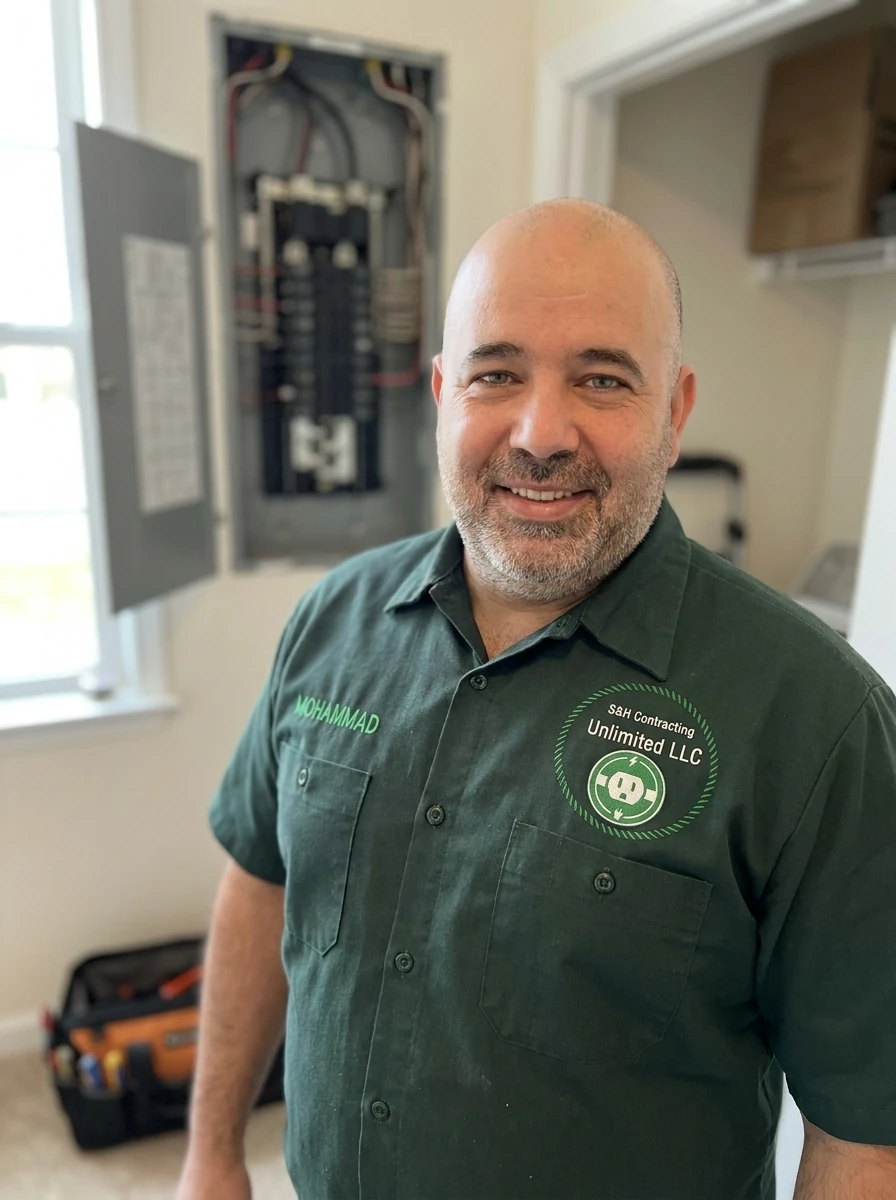
Mohammed Salahuddin is a Master Electrician licensed in Virginia with over 16 years in the trade. Master is the highest electrician tier the state issues — it requires several years of journeyman work, a passed state exam, and a clean record. S&H Contracting Unlimited is fully insured, and Mohammed Salahuddin runs a maintenance team so scheduling stays flexible even during peak season.
Chandelier and heavy-fixture installations are a regular part of the workload — particularly in the McLean and Vienna luxury home market where two-story foyers and high ceilings are standard. Mohammed Salahuddin handles the structural assessment, fan-rated box installation, dimmer wiring, and final testing personally on most residential calls. The same discipline applies to recessed lighting layouts, pendant clusters, and outdoor sconces.
S&H Contracting Unlimited holds a 5.0-star average across 69 customer reviews. Real reviews from Northern Virginia, DC, and Maryland customers across residential and commercial jobs. 5.0-star average across 69 verified Google reviews.
Dale City neighborhoods we serve
We cover all of Dale City, VA, including:
- Ashdale — the first section, near the eastern entrance off Gideon Drive
- Birchdale — one of the original six dales, northeast of Dale Boulevard
- Cloverdale — original section with mature trees and established lots
- Forestdale — the sixth original dale, marking the end of the first phase
- Hillendale — 1970s expansion along the middle of Dale Boulevard
- Kerrydale — 1970s-era section with a mix of splits and colonials
- Mapledale — 1970s-1980s section toward the western end of Dale Boulevard
- Princedale — one of the later dales, in the western portion of the community
- Ridgedale — 1980s section near the western boundary toward Hoadly Road
- Silverdale — later-phase section at the western end of Dale City
Outside Dale City, we serve Woodbridge, Lake Ridge, Dumfries, Triangle, Manassas, and the rest of Prince William County. We also cover Lorton, Springfield, and surrounding Fairfax County and Stafford County communities.
Related electrical services in Dale City
Light fixture work often surfaces other electrical needs — an undersized panel, an outdated circuit, or a homeowner who wants an EV charger while we already have the tools on-site. Here are related services we handle in Dale City.
Frequently asked questions
How much does it cost to install a light fixture in Dale City, VA?
It depends on the fixture type, whether there’s existing wiring at the location, and the complexity of the mount. A simple fixture swap — removing an old flush-mount and connecting a new one to the same junction box — is the most affordable job we do. Chandeliers, new fixture locations that require running wire, and recessed lighting layouts cost more because the labor and materials scale up. We give you a written estimate before any work starts. For straightforward replacements, we can usually quote over the phone. Call 703-972-5571 and tell us what you’re working with.
Can I install a chandelier myself?
A lightweight chandelier under 25 pounds on an existing junction box is technically a DIY project if you’re comfortable working with live wiring after killing the breaker. But most chandeliers worth hanging weigh 50 to 200+ pounds, and that changes everything. Heavy fixtures need a fan-rated or heavy-duty junction box bolted to ceiling joists — not the lightweight plastic box builders install for a basic flush-mount. You also need to verify the circuit can handle the load, the dimmer switch is compatible, and the mounting bracket is rated for the weight. At two-story foyer height, it’s a two-person job with scaffolding. Hire a licensed electrician.
How long does it take to install a light fixture?
A straightforward fixture swap — old fixture off, new fixture on, same wiring and junction box — takes 30 to 60 minutes. Chandeliers and new fixture locations where we need to run wire, cut a ceiling opening, and install a junction box run 2 to 3 hours. Recessed lighting layouts with 6 to 8 can lights typically take half a day, including cutting ceiling holes, running wire between housings, wiring the dimmer, and testing the full layout. If you’re having multiple fixtures replaced in one visit, we schedule the time accordingly. We test every fixture and clean up before we leave.
Can you install a light where there isn’t one now?
Yes. Adding a fixture where none exists means running wire from the nearest circuit to the new location, cutting a ceiling opening, installing a junction box, mounting the fixture, and wiring a wall switch. If there’s attic access above the ceiling, the wire run is straightforward — we fish cable through the attic and drop it into the new box. If the ceiling is finished with no access above, we run conduit or fish wire through the wall cavity, which takes longer but avoids tearing out drywall. Either way, new fixture locations in most Dale City jurisdictions require a permit. We pull the permit and schedule the inspection.
Do I need a permit for light fixture installation?
It depends on the scope. Replacing an existing fixture with a new one on the same wiring and junction box — a straight swap — typically does not require a permit in most Northern Virginia jurisdictions. Adding a new fixture where none existed, running a new circuit, or modifying the electrical panel to support a new load usually does. In Dale City, permits for residential electrical work go through the local building department. We handle the permit application and schedule the inspection when the work requires it. You don’t need to call the permit office yourself — that’s part of what we do.
Can you install a fixture I bought myself?
Yes — we install customer-supplied fixtures regularly. Pendants from Wayfair, chandeliers from a local lighting showroom, flush-mounts from Home Depot, sconces from Amazon — if it’s UL-listed and ships with mounting hardware and instructions, we’ll wire it and mount it. Before we start, we confirm the fixture is compatible with the junction box, check the weight rating, and verify the dimmer switch works with the fixture’s bulb type. If parts are missing or the fixture isn’t rated for the location (indoor fixture going outdoors, for example), we’ll tell you before we begin so there are no surprises.
What’s the difference between a regular junction box and a fan-rated box?
A standard junction box is designed to hold the weight of a typical light fixture — usually up to 50 pounds. A fan-rated box is built heavier, with reinforced mounting that bolts directly to ceiling joists or a support brace. It’s engineered to handle both the weight and the vibration that ceiling fans produce during operation. NEC code requires a fan-rated box for ceiling fans, and we use them for any chandelier or heavy pendant that approaches or exceeds 50 pounds. The difference matters because a fixture that outweighs its box will eventually pull loose from the ceiling — we’ve repaired that situation in Dale City homes more than once.
Do you install recessed lighting?
Yes. We install recessed (can) lights in kitchens, living rooms, hallways, and basements. The process starts with measuring the room and planning a layout that distributes light evenly — not the builder-grade placement that leaves dark corners and hot spots. We cut ceiling holes, install IC-rated housings that maintain safe clearance from attic insulation, run wire between each fixture, and connect everything to a dimmer switch. A typical 6- to 8-fixture layout takes half a day. We can also convert existing flush-mount or pendant fixtures to recessed if you want a cleaner ceiling line. The dimmer is included in the install.
Ready to get that fixture installed?
Call 703-972-5571 and tell us what fixture you’re working with — flush-mount, pendant, chandelier, recessed layout, or outdoor sconce. Mohammed Salahuddin or a member of the team will walk you through what’s involved, give you a straight answer on timeline, and schedule the work. Same-day and next-day availability for most fixture jobs in Dale City.
703-972-5571