EV CHARGER INSTALLATION — NORTHERN VIRGINIA, MARYLAND & DC
Level 2 Home EV Charger Installation by a Licensed Master Electrician
Mohammed is a Virginia Master Electrician (#2710073974) who installs home EV charging stations — Tesla Wall Connector, ChargePoint, JuiceBox, Emporia, and every other major brand. Licensed in VA, MD, and DC. 16+ years of experience.
Level 1 vs Level 2 — Why You Want Level 2
Every electric vehicle comes with a Level 1 charger that plugs into a standard 120V household outlet. It works — but it adds about 3–5 miles of range per hour. For most EV owners, that means plugging in overnight and waking up to a half-charged battery.
A Level 2 charger runs on a 240-volt circuit (the same voltage as your dryer or oven) and adds 25–40 miles of range per hour. Plug in when you get home, wake up to a full charge. That is the difference between managing your battery and forgetting about it.
Installing a Level 2 charger is an electrical job: it requires a dedicated 240V circuit from your panel, properly sized wire, a NEMA 14-50 outlet or hardwired connection, and a permit in most jurisdictions.
What EV Charger Installation Involves
Panel Assessment
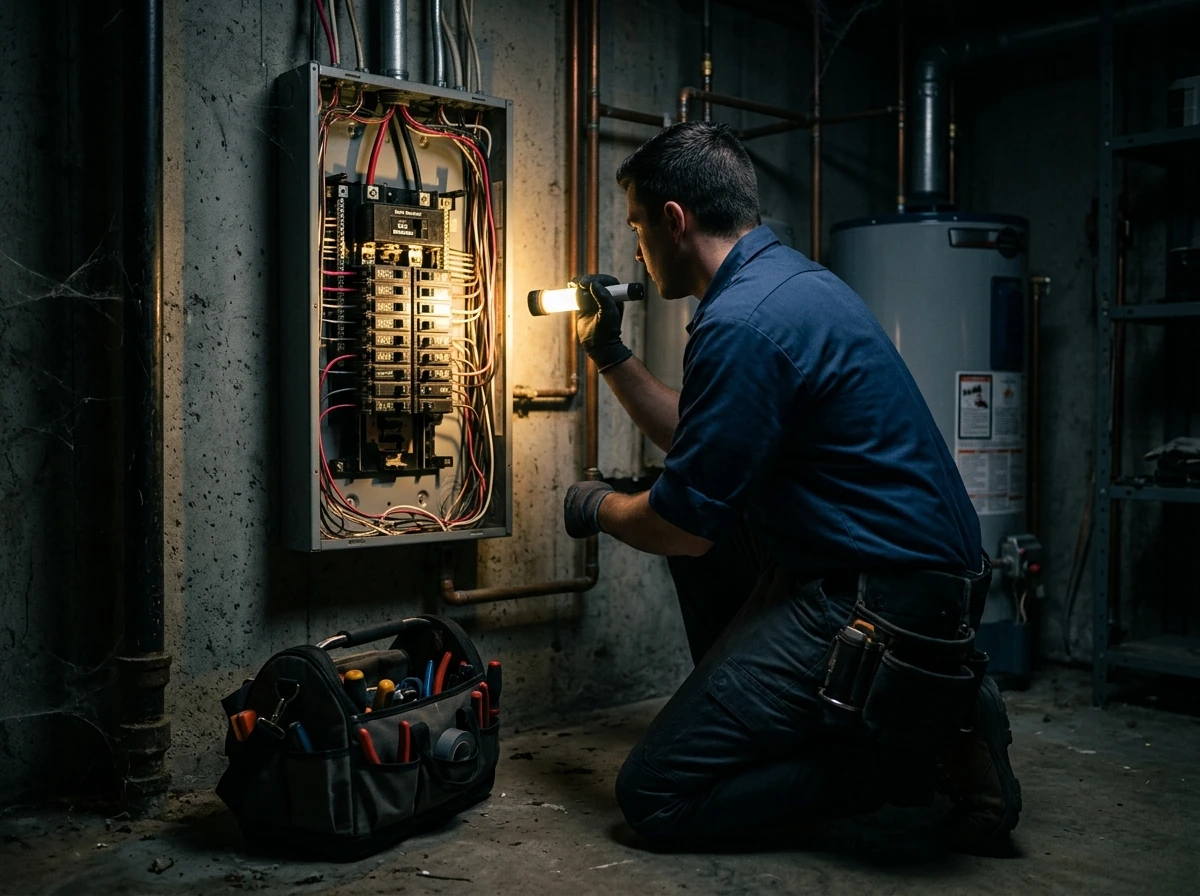
A Level 2 charger draws 30–50 amps. Mohammed checks whether your electrical panel has the capacity for a new 240V circuit. If your panel is at capacity (common in older homes), he will explain the options — which may include a panel upgrade or a load-management device.
Circuit Run
A dedicated 240V circuit is run from the panel to your charging location — typically the garage, driveway, or carport. The wire gauge depends on the charger’s amperage and the distance from the panel. Longer runs need heavier wire to avoid voltage drop.
Charger Mounting & Connection
Wall-mounted units (Tesla Wall Connector, ChargePoint Home Flex) are either hardwired directly or plugged into a NEMA 14-50 outlet. Hardwired installations are permanent and cleaner; plug-in installations let you take the charger if you move. Mohammed installs both ways.
Permit & Inspection
Most Virginia and Maryland jurisdictions require an electrical permit for a new 240V circuit. Mohammed pulls the permit, schedules the inspection, and ensures the installation passes on the first visit.
Charger Brands We Install
Mohammed installs every major home EV charger. You buy the unit; he installs it. Or he can recommend one based on your vehicle, charging speed needs, and whether you want smart features (scheduling, usage tracking, load sharing).
Tesla Wall Connector
Tesla’s own Level 2 charger. Up to 48 amps, Wi-Fi enabled, works with all Tesla models. Can be configured to share power across multiple units. Hardwired installation.
ChargePoint Home Flex
Works with all EVs (J1772 connector). Adjustable amperage from 16 to 50 amps. Plug-in or hardwired. App-based scheduling and usage tracking.
Other Brands
JuiceBox, Emporia, Grizzl-E, Wallbox Pulsar, Enel X JuicePole, Siemens VersiCharge, and more. If it plugs into a NEMA 14-50 or hardwires to a 240V circuit, Mohammed installs it.
Why S&H Contracting for EV Charger Installation
- Virginia Master Electrician #2710073974 — Mohammed holds the master license and does the work himself
- Licensed in Virginia, Maryland, and Washington DC — three jurisdictions, one call
- Panel expertise — if your panel needs an upgrade to support the charger circuit, Mohammed handles both jobs
- 16+ years of experience — residential and commercial electrical, including 240V circuits and heavy loads
- 5.0-star Google rating — read the reviews
- Written estimate before any work — the panel assessment, circuit run, and charger installation are all quoted upfront
EV Charger Installation Service Areas
S&H Contracting installs home EV chargers across Northern Virginia. Click any city for details.
Woodbridge, VA
Prince William County — garage and driveway installations.
View details →Lake Ridge, VA
Attached garage homes from the 1980s–1990s — panel capacity varies.
View details →Manassas, VA
Independent city — we handle Manassas permitting directly.
View details →Dale City, VA
Dense townhome community — shared-wall and carport installations.
View details →Lorton, VA
South Fairfax County homes with varying panel ages and capacities.
View details →Springfield, VA
Mix of older ranches and newer townhomes — different panel situations.
View details →Alexandria, VA
Historic homes with older panels that often need upgrades for 240V circuits.
View details →EV Charger Installation FAQ
Do I need a panel upgrade to install an EV charger?
Not always. Many homes built after 2000 have 200-amp panels with spare capacity for a 40–50 amp charger circuit. Older homes with 100 or 150-amp panels are more likely to need an upgrade. Mohammed checks the panel first and tells you before quoting the job.
How long does the installation take?
A straightforward installation — panel has capacity, short run to the garage — takes 3–5 hours. Longer runs, panel upgrades, or outdoor installations take longer. Mohammed gives you a time estimate alongside the written quote.
Should I hardwire or use a plug-in charger?
Hardwired is permanent and slightly cleaner. Plug-in (NEMA 14-50) lets you take the charger with you if you move. Both are code-compliant. Mohammed installs either way and can advise based on your situation.
Can I install a charger outside without a garage?
Yes. Outdoor-rated chargers and weatherproof enclosures make driveway and carport installations practical. The circuit and outlet or hardwired connection must use outdoor-rated components and GFCI protection.
Related Services
Ready to Charge at Home?
Mohammed will assess your panel, plan the circuit run, and give you a written estimate. Same electrician from quote to final inspection.
703-972-5571